Itinerary

South Korea in 8 days: a southern loop to Busan, then Seoul

  • 8 days
  • 29 stops
  • Apr 2024
Before we start · intro, costs & tips

Eight days in South Korea in early April, split three ways. Four days on a guided loop through the south-west, from the Baekje royal tombs to the tea fields and the coast, ending in Busan. Three days in Seoul for palaces, street food, design and hidden bars. And one full day out to the DMZ, the border with North Korea.

Getting there: from Dubai, Emirates flies direct to Incheon. Our way out went via Beijing with Air China.

Where to stay in Seoul: Insadong for the first night, close to the palaces, then Myeongdong for shopping and street food.

Getting around: the tour covers days 2 to 5 by coach. In Seoul, the metro and taxis are easy, and a KTX train links Busan back to the capital in under three hours.

1 stop · swipe or tap a card

Afternoon & evening

Insadong & jokbal in Dongdaemun

We landed in Seoul in early April. Spring, they said. Coming from Dubai, it felt like a polite winter: I'm famously cold-blooded, so take my weather reports with a pinch of salt, but pack a proper jacket anyway.

We dropped our bags at Amid Hotel in Insadong, the old quarter of tea houses, galleries and craft shops, and went straight out for a first walk. Seoul is seriously artsy: every second door is a café so photogenic you feel underdressed walking in.

We arrived late, so day one was simply dinner, a stroll and a first taste of Korean food. A confession: I'm not a big kimchi fan, which in Korea is a bit like not liking pasta in Italy. It shows up at every meal, uninvited.

Luckily everything else made up for it. Korean BBQ became my safe place for the whole trip: excellent meat, grilled at the table, wrapped in lettuce. Here we started with jokbal, braised pork trotters sliced thin. Better than it sounds, I promise.

To close the first night, a drink in Ikseon-dong, a tangle of tiny alleys where century-old hanok houses have been turned into bars, cafés and restaurants: wooden beams, tiled roofs and young Seoulites spilling out onto the street. Old Seoul and new Seoul, sharing a table.
Book where I stayed

4 stops · swipe or tap a card

Morning

Tomb of King Muryeong

Today starts our 4 day group tour to the south. The tour is a bit expensive, but it includes all transportation, all entrance fees during the tour, 3 nights’ accommodation, and pick up and drop off from your hotel.

The skies stayed stubbornly grey (hence the slightly gloomy photos), but some of the places more than made up for it.

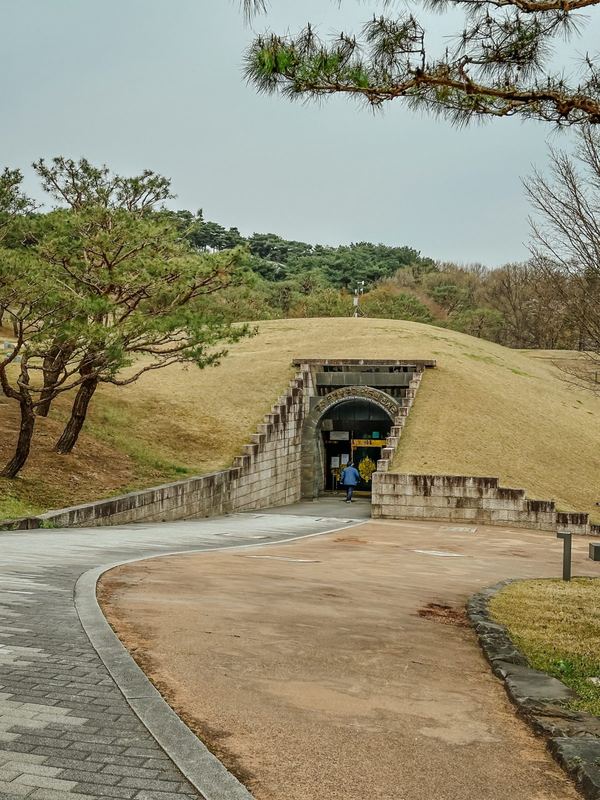
First stop: the tomb of King Muryeong, who ruled the Baekje kingdom from 501 to 523. It was found by chance in 1971, untouched, with more than 4,600 objects inside, and a stone epitaph that tells you exactly who's buried there, a rare luxury in archaeology.

You can't visit the real tomb, which is closed to protect it. Instead it has been rebuilt inside the hill next door: you crouch through low tunnels into the burial chambers, then move on to a small museum with interactive screens. Most of the labels are in Korean only, so a guide helps a lot.

Book what I booked

Morning1h

Gongsanseong Fortress

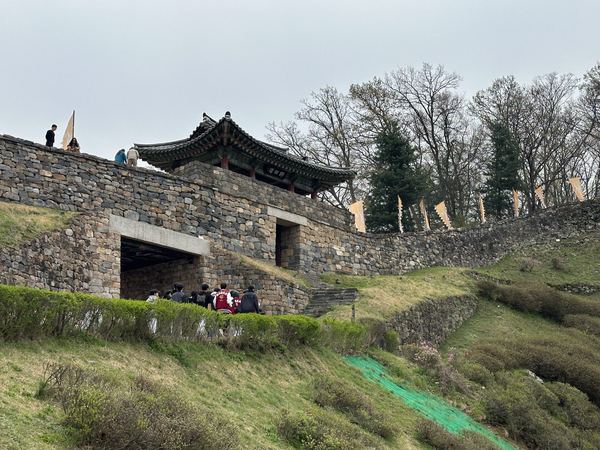
A UNESCO World Heritage fortress on the hill above the Geum river, with panoramic walks along the walls.

Afternoon

Iksan Prison Set

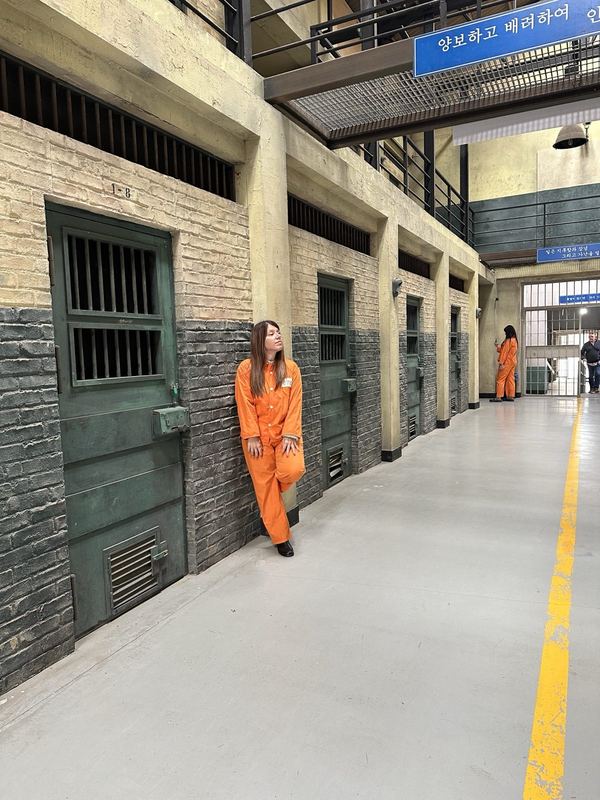
Next, prison. Well, sort of. The Iksan Prison Set isn't a real jail but a film set, built in 2005 inside an old elementary school, and it's still the only prison set in Korea. If you've watched a K-drama with a jail scene, there's a fair chance it was shot here.

You get a prisoner's uniform (or a guard's, if you prefer power), and you're free to wander the corridors, cells and interrogation room. Not unmissable, but if you're passing by, it's worth an hour and a few silly photos.

Afternoon

Onggi jar garden

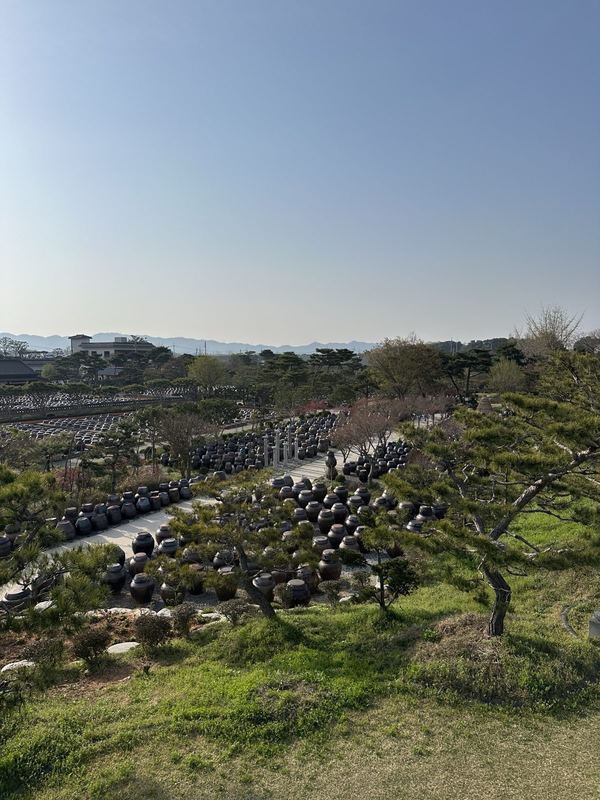
In North Jeolla we stopped at a field of onggi, the big brown earthenware jars Koreans use for fermenting. There are thousands of them, lined up in rows as far as you can see, and the view is honestly crazy. Some are enormous. Others are kept in little houses while they do their slow work.

Small correction to my own story: I was sure it was all kimchi, but most jars like these hold soy sauce, doenjang (soybean paste) and gochujang (chilli paste). Kimchi just gets all the fame.

We spent the night in Iksan, ready for Jeonju the next morning.

4 stops · swipe or tap a card

Morning1h

Jeonju Hanok Village

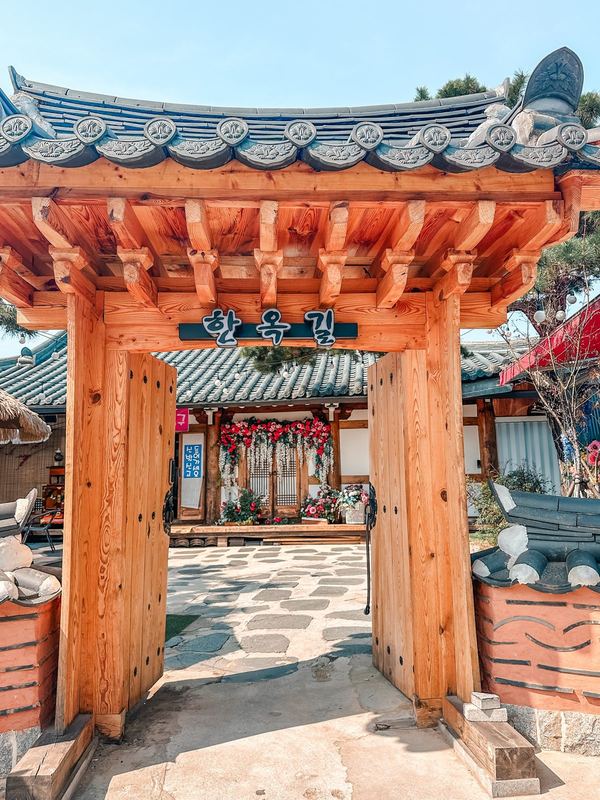
Then Jeonju, and its Hanok Village: more than 800 traditional houses with curved tiled roofs, right in the middle of a modern city. A hanok is the classic Korean house: wooden frame, clay walls, paper doors and a roof whose eaves curve upwards at the ends. Underneath, the ondol, a floor heated by flues running beneath it, a Korean invention centuries before anyone thought of underfloor heating.

Jeonju isn't just any city, either. The Yi family, who founded the Joseon dynasty and ruled Korea for five centuries, came from here, which made Jeonju the dynasty's spiritual capital. The village grew outside the old city wall, where the yangban, the aristocratic class, built their homes once the wall came down. Today it's a living neighbourhood and an official Slow City, with guesthouses where you can sleep on a heated floor, tea houses, craft workshops and alleys full of people in hanbok.

It's also one of Korea's food capitals, and a UNESCO City of Gastronomy. The dish to try is Jeonju bibimbap, the original version of the famous rice bowl, and the street food along the main road is a meal in itself.

Morning1h

Hanbok & Gyeonggijeon Shrine

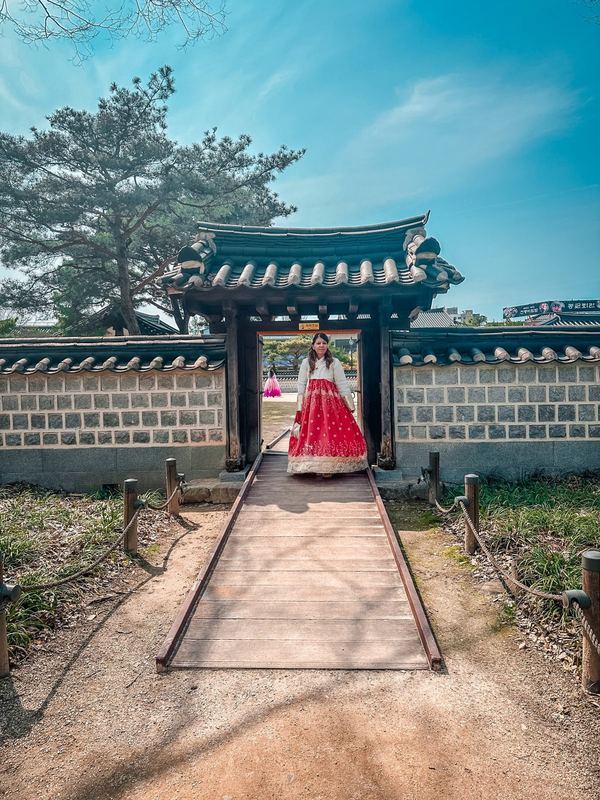
Jeonju is where we tried the hanbok, the traditional Korean dress. Little shops all over the village rent them by the hour, and everyone does it, locals included. The hanbok was everyday wear until the last century. Renting one to walk around the old quarters became a trend over the last ten years or so, and many sights let you in free if you're wearing one. They'll do your hair too, and a small matching purse is included, so your phone and wallet come with you without ruining the look. You leave fully in character.

Dressed up, we walked to Gyeonggijeon, the shrine built in 1410 to keep the portrait of King Taejo, founder of the Joseon dynasty, which ruled Korea for five centuries. It burned during the Japanese invasions of the 1590s and was rebuilt in 1614.

Food report: here I ate the best fish cakes of my life, plus some remarkable lotus roots, and we had a proper Korean BBQ. We also met our first robots serving at the table. South Korea is famously ahead of the curve, and this won't be the last robot in this story: more when we get back to Seoul.

Afternoon

Baegyangsa Temple

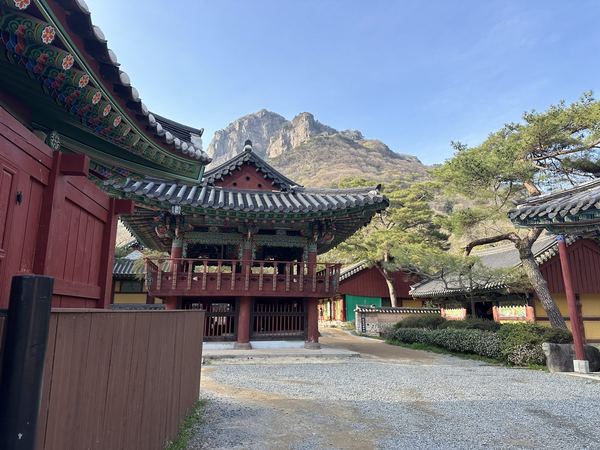
Hanbok returned and back in our jeans, we said goodbye to Jeonju and headed for the mountains, into Naejangsan National Park, famous across Korea for its autumn maples (in April it was all fresh green). Last stop of the day: Baegyangsa, a temple founded in 632 on the slopes of Baegamsan. Brightly painted halls against a backdrop of rocky peaks: a truly beautiful setting, and the architecture alone is worth the trip.

Before you even reach the courtyard, you walk through the gate of the Four Heavenly Kings: four giant painted guardians, one for each direction, with bulging eyes, fierce moustaches and their feet planted on small crushed demons. They protect the temple and the Buddhist law, and they're found at the entrance of most Korean temples, each with his attribute: a sword, a lute, a dragon, a pagoda. They're meant to scare evil away. Tourists, on the other hand, take selfies with them.

We had tea with a Buddhist nun, which was the highlight. You can ask questions, and we did, plenty. The temple is also known for its temple food and for temple stays, if one cup of tea isn't enough.

Evening

Night in Gwangju

Overnight in Gwangju.

4 stops · swipe or tap a card

Morning1h 30

Boseong Green Tea Field

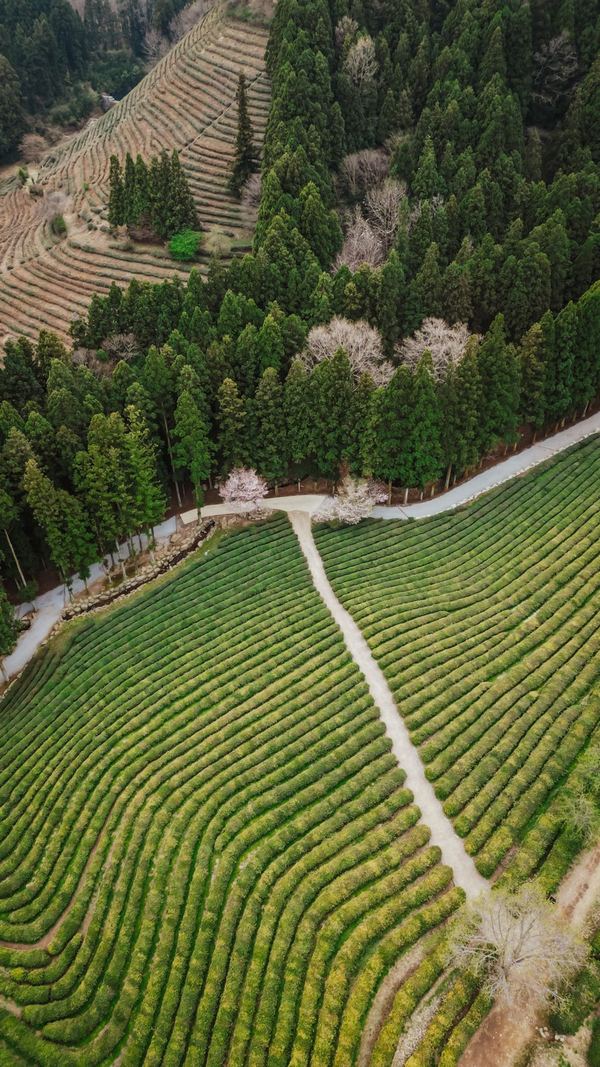
Next morning: the tea plantations of Boseong, row after row of tea bushes combed across the hills like a giant green corduroy. Once again the weather wasn't exactly photo-friendly, but the view was worth it.

I managed to fly the drone here, and watching my baby take off never gets old. We also had a green tea ice cream, the local must, despite temperatures that were anything but summery. Priorities.

Afternoon2h

Suncheon Bay & National Garden

For lunch we went to a local self-service Korean BBQ: you walk along counters of raw ingredients, pick your meat, your vegetables and all the little side bits, then carry your loot back to the table and grill it yourself. Dangerous for people with big eyes and small stomachs.

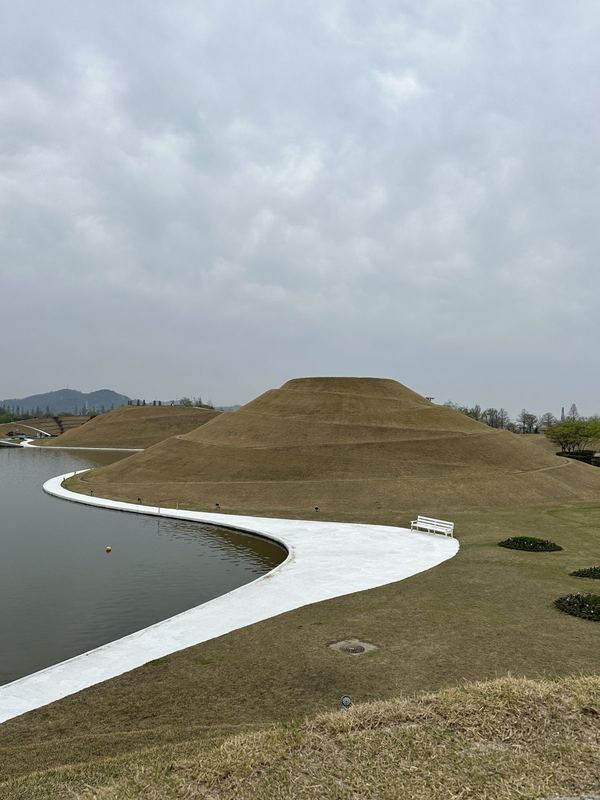
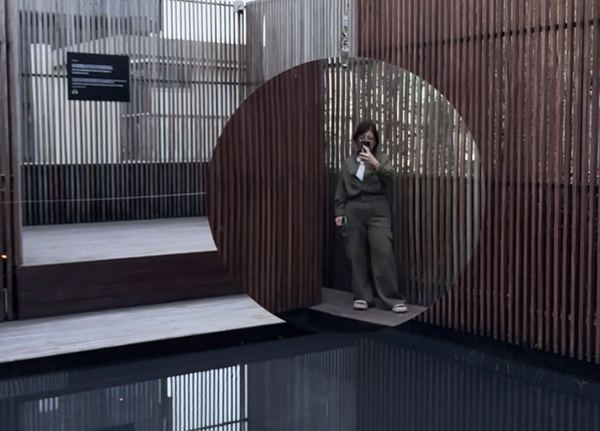
Then Suncheon Bay National Garden: grass-covered spiral hills around a lake, a Korean garden seen through a moon gate, tulip fields, flamingos and a woven bamboo pavilion. Honest review: if you love flowers and gardens, it's a pleasant walk. Nothing mind-blowing, maybe the grey sky didn't help, but nice. Next to it, the wetland of Suncheon Bay has the largest reed beds in Korea, a refuge for rare birds.

Afternoon30m

Yeosu cable car

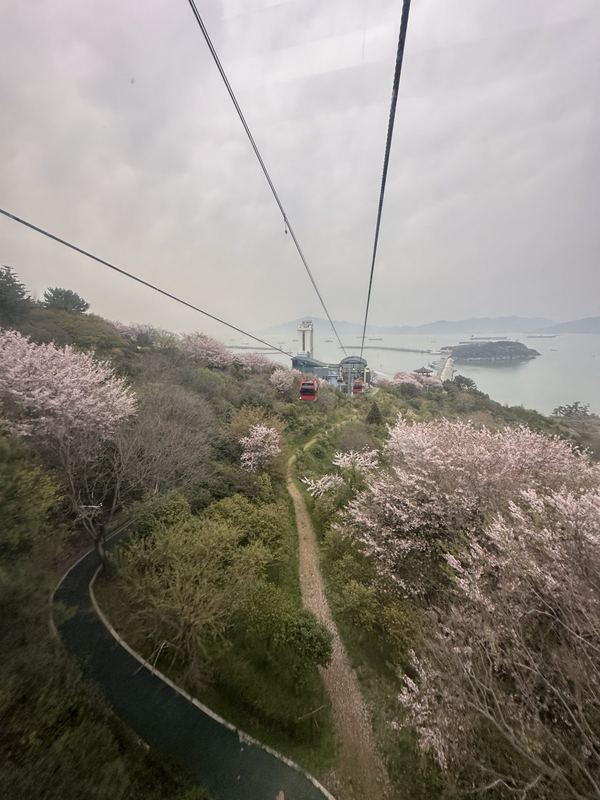
In Yeosu we took the cable car over the sea, from Dolsan Island back to the mainland, with the coastline and the bridges below, then walked around town for a while.

Evening30m

Admiral Yi Sun-sin Square

Dinner was on the waterfront, another mega Korean BBQ, this time all seafood: octopus, prawns, abalone and a few things I couldn't quite identify. Everything was incredibly fresh and delicious. Fair warning: abalone goes on the grill alive, and it moves. Very fresh indeed.

The real star of Yeosu, though, was the hotel room. It had a styler: a wardrobe that steams and presses your clothes while you sleep. Everything was in Korean, so we decoded the little symbols with Google Translate, with mixed confidence, and tested it on a shirt. It worked. An object of desire for anyone over thirty, I'd say.

3 stops · swipe or tap a card

Morning1h

Gamcheon Culture Village

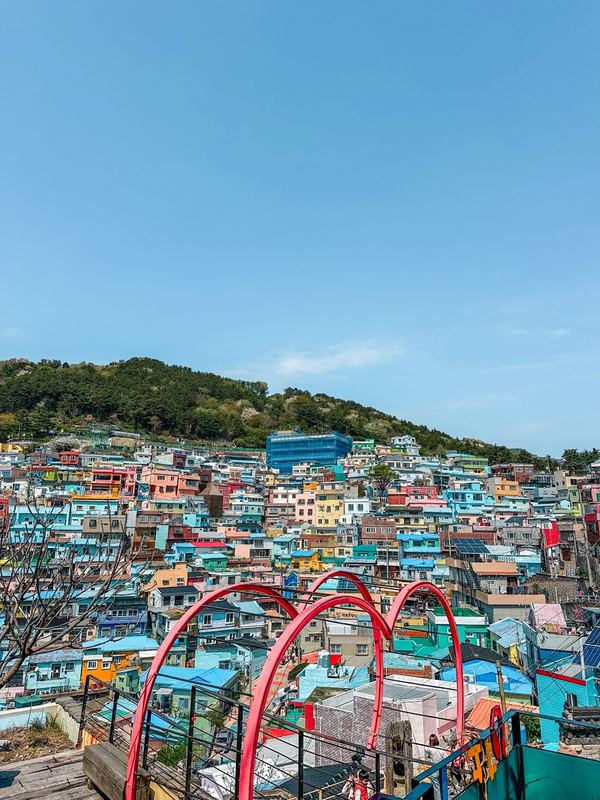
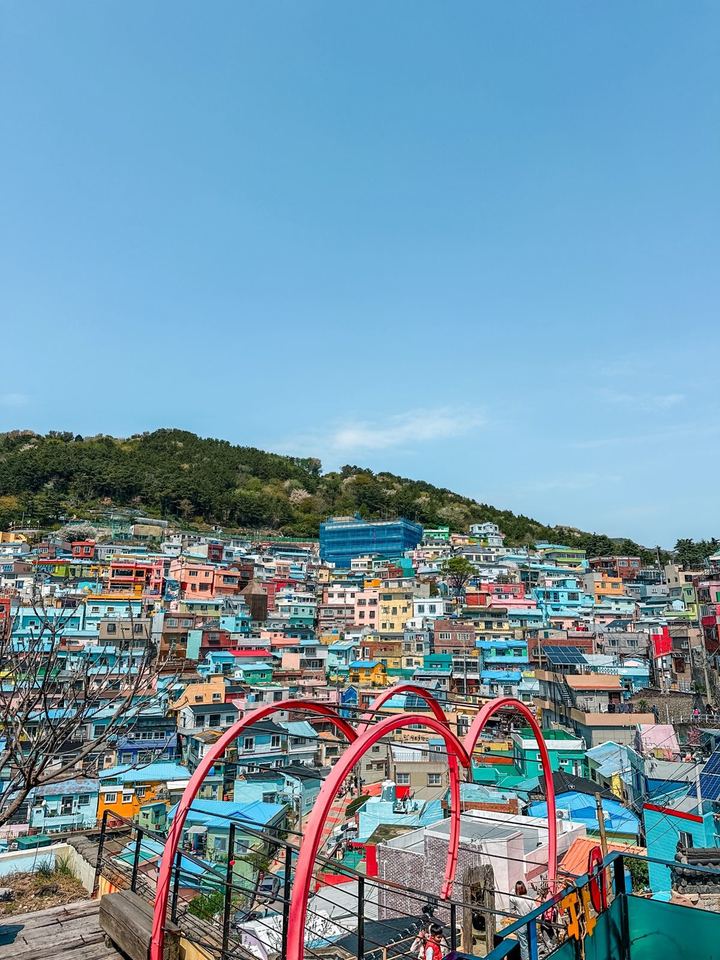
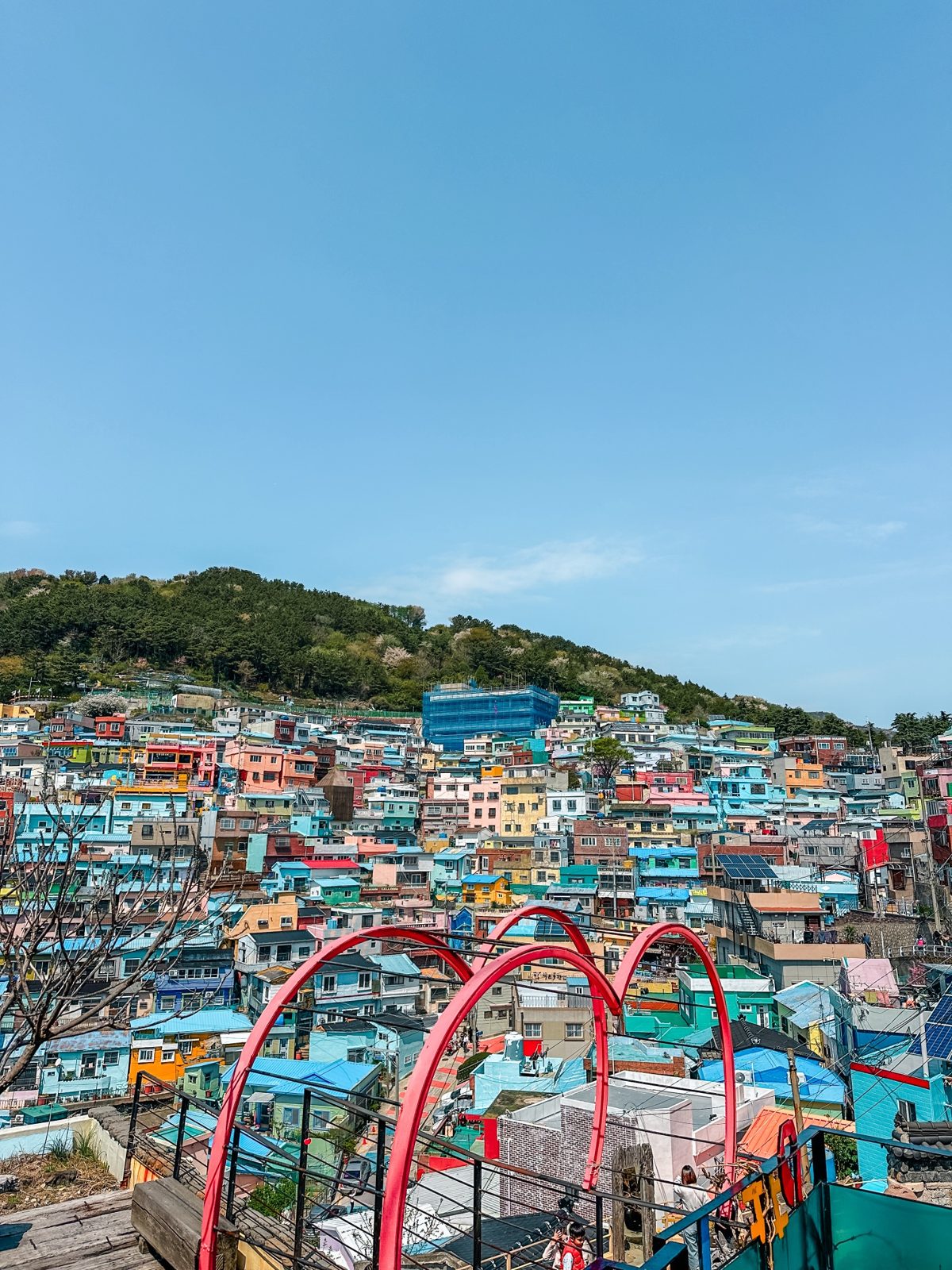
Then Busan, and Gamcheon Culture Village, houses stacked like Lego up the hillside above the port, which earned it the nicknames 'Machu Picchu of Busan' and 'Korea's Santorini'.

It wasn't always pretty: the village grew as a poor working-class neighbourhood, and in the 1950s hundreds of families of a small religious community, Taegeukdo, settled here. In 2009 an art project brought in artists and residents to paint the houses, fill the alleys with murals and sculptures, and turn empty homes into galleries and shops.

Today it's a total Instagram spot, crowded with Koreans posing at every corner. The most famous wall is the BTS mural, with a queue of teenage fans in front of it (two of the band grew up in Busan). Don't miss the Little Prince and his fox, sitting on a ledge and looking over the rooftops.

We also tried the fortune machines you find all over South Korea, in random corners and alleys: put in a coin, pick your zodiac animal and out comes a little ball with your fortune. A fortune cookie, Korean edition.

We couldn't stay long because we had the train back to Seoul, but it's a lovely walk.

Evening

Myeongdong

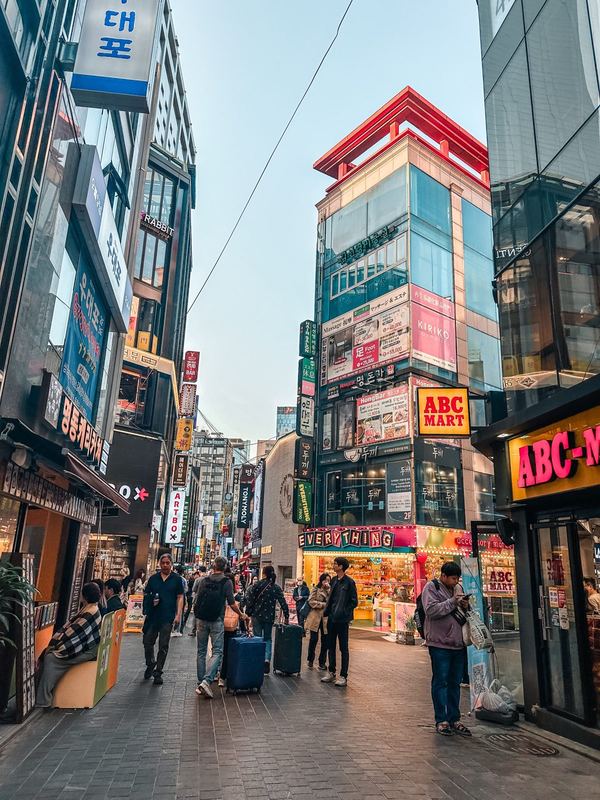
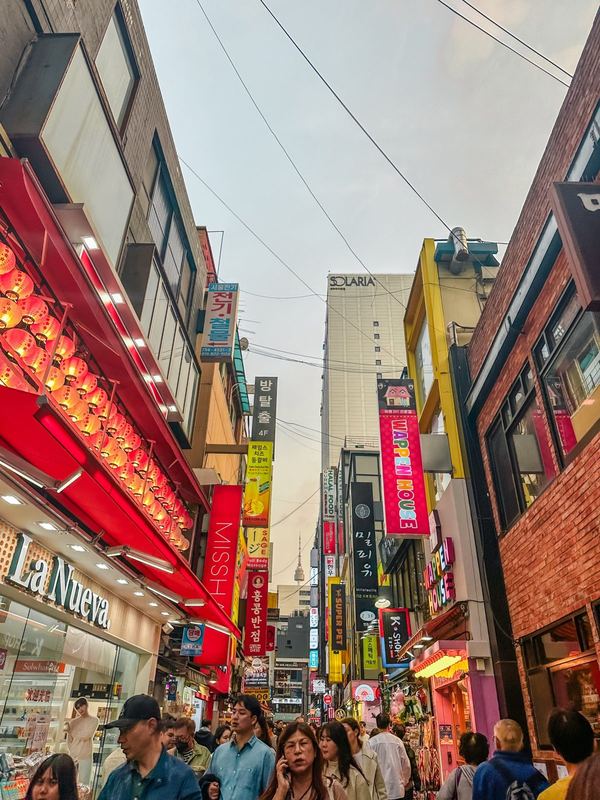
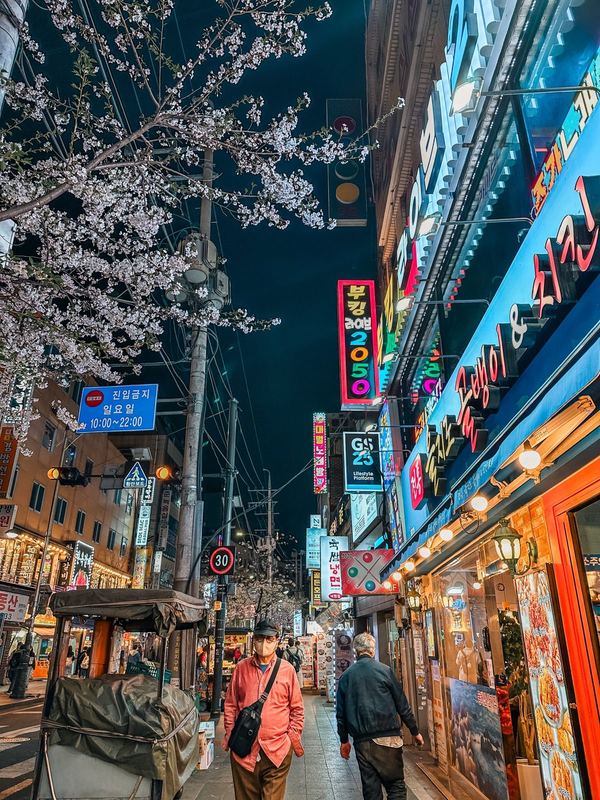
We took the train back to Seoul and moved neighbourhood, to Myeongdong, the shopping district, all pedestrian streets and shop signs stacked ten storeys high.

South Korea is also very high-tech, so we checked in at Henn na Hotel, a chain born in Japan where robots handle reception. Great central location, highly recommended. The room was small but fine. There's a little video assistant in the room, a sort of Alexa with a face that pulls expressions, where you can ask questions and order things. And what you order arrives with another robot that takes the lift on its own. Very, very fun. Honestly, I'd like one at home.

Book where I stayed

Evening

Le Chamber

In the evening we headed to Gangnam for the first of many speakeasies. Seoul is famous for them, and we'd shortlisted a few before leaving.

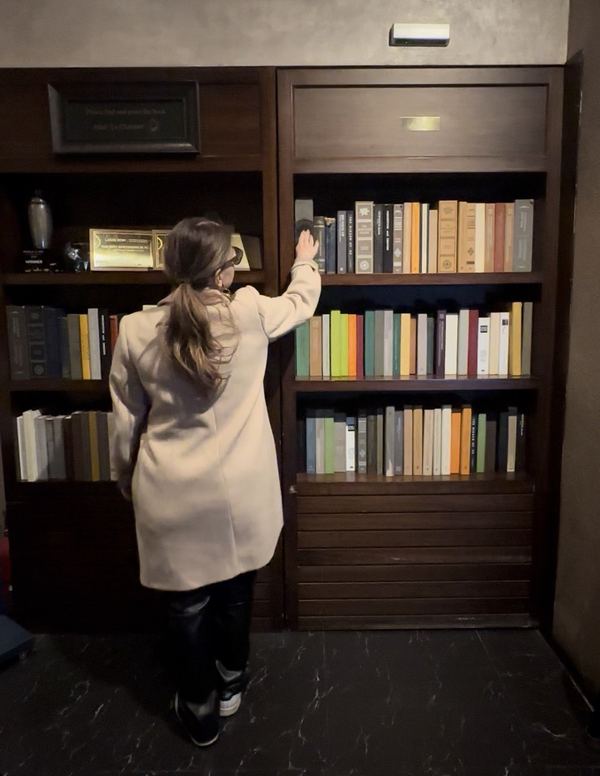
Le Chamber is in Cheongdam-dong, in a basement behind a bookshelf: pull the right book and the wall opens. The owner-bartenders are Diageo World Class champions, and it shows.

The detail I loved: the cocktail menu is drawn as a flavour map, bitter to sweet and aromatic to fruity, a bit like the maps we make in service design. It helps you choose, and it's a little gem of customer experience. The cocktails come in very unusual glasses too.

6 stops · swipe or tap a card

Morning

Gyeongbokgung Palace

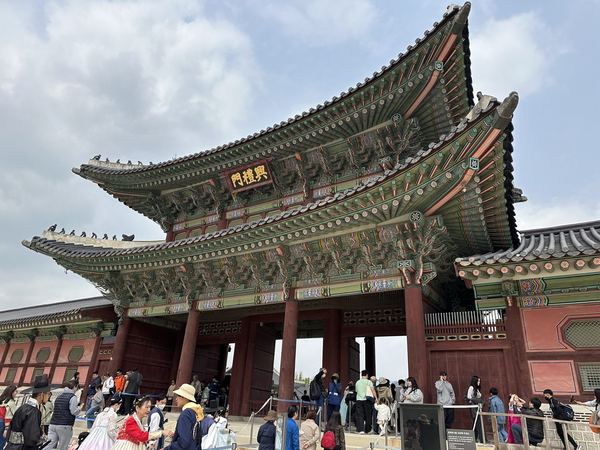
Then Gyeongbokgung, the main palace of the Joseon dynasty, through the Heungnyemun gate. Confession: we didn't go in. The queue was huge, we hadn't booked tickets, and after a few days of temples we'd had our dose. We watched the parade of girls in hanbok instead (wearing one gets you in free) and moved on. Book ahead if you want the inside.

Morning

Nuldam Space

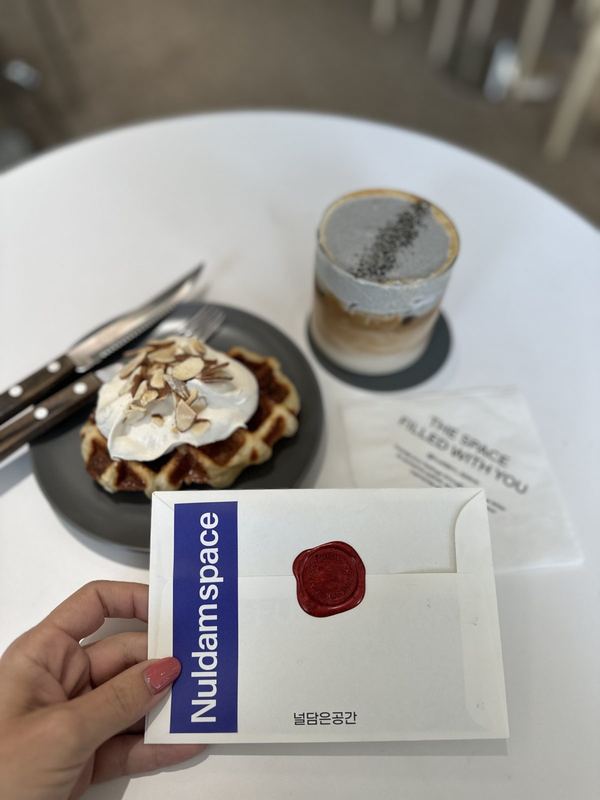
Next morning: Nuldam Space, a café that became famous because you can write a letter to your future self. You seal it with wax, file it under a date, and they post it a year later. Small spoiler: a year later, the letter really arrived.

I already do something similar at home: when I decorate the Christmas tree, I write a letter to myself and hide it in the box with the ornaments, so I read it the following December. It's a lovely way to keep track of what you've achieved and what you want next. If you don't do it yet, try it.

Afternoon

Insadong & Ssamziegil

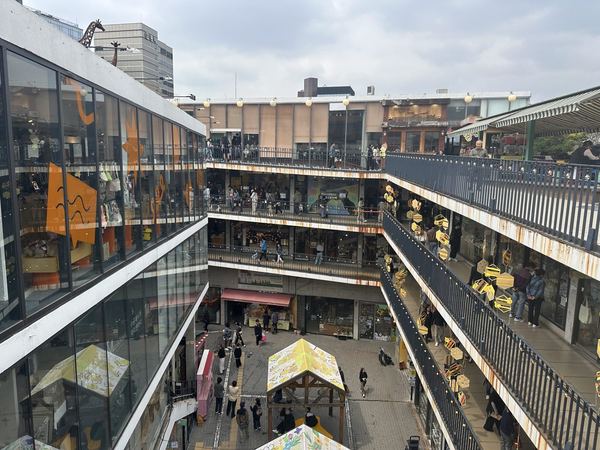
Insadong, full of little shops, street food and souvenirs. Its centre is Ssamziegil, a building of shops around a courtyard, with a ramp that spirals up four floors, so you shop all the way to the roof without noticing the stairs.

Nearby, yes, there's a poop café. South Korea doesn't do things halfway.

Afternoon

HiKR Ground

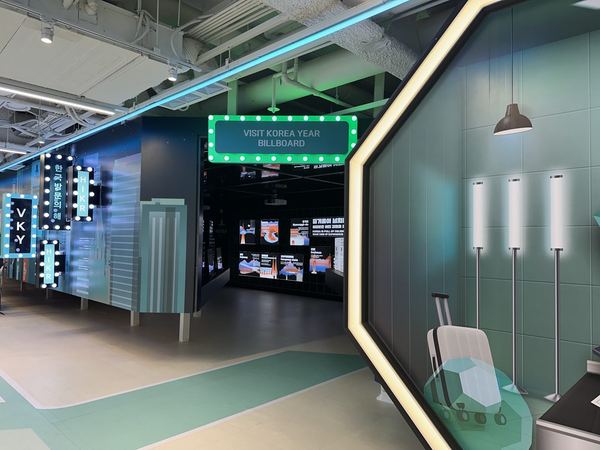
HiKR Ground, by the Cheonggyecheon stream, is the Korea Tourism Organization's free showcase of the country, and it's very experiential: five floors with a giant media wall, art, K-pop sets where you can shoot your own music video, alleys with photo booths and coin karaoke, and a travel lounge at the top. Worth an hour, even if you're not a K-pop fan.

Afternoon

Shopping in Myeongdong

As everyone knows by now, South Korea means skincare. We kept plenty of time to dive into Olive Young and get lost in it, and flew home with literally a suitcase full of products (photographic evidence below). K-Mecca for K-pop merch, if that's your thing.

When the shops start closing, Myeongdong's streets fill with food stalls: skewers, egg bread, tornado potatoes and fried everything. My favourite was a stall selling sweet-and-sour fried chicken under the name Starchicken, with a green round logo that looked very, very familiar. Trademark lawyers, look away.

Evening

Zoosindang

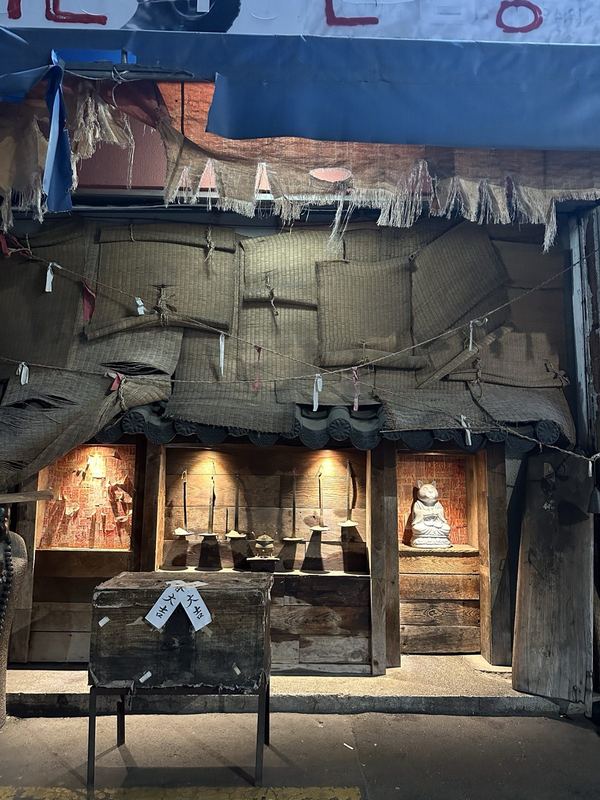
In the evening, the second speakeasy: Zoosindang, in Sindang, very famous and probably the easiest of all to find. The front looks like an old fortune teller's shrine, with no door handle in sight: you push the cat statue and the wall opens. Inside, a jungle of plants, glowing lanterns marked with the zodiac signs, and very good cocktails.

2 stops · swipe or tap a card

Morning

DMZ, 3rd Tunnel & suspension bridge

Bring your passport

Next day: a GetYourGuide tour out of Seoul. First stop, the red suspension bridge on Mt Gamaksan in Gyeonggi-do. It was drizzling, but it was still worth it.

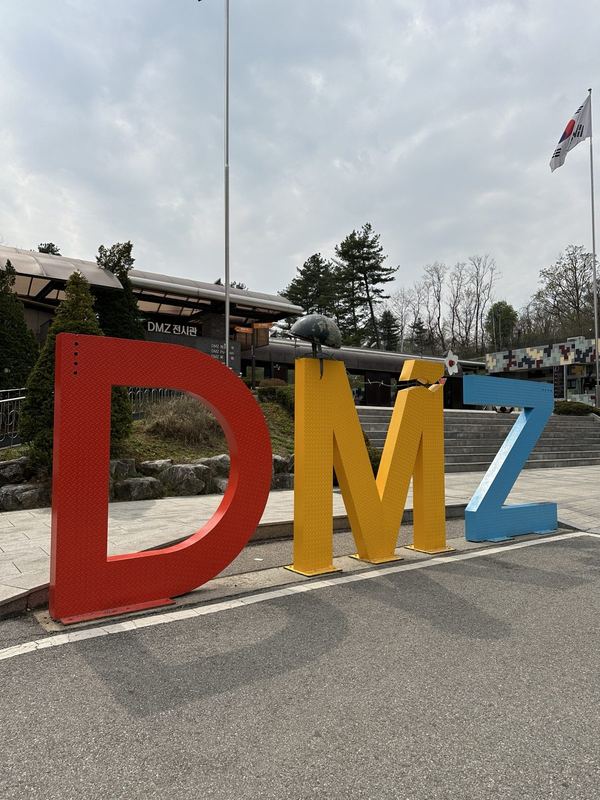
Then the infamous DMZ, the demilitarised zone on the border with North Korea. From Dora Observatory, the closest you get, you look through binoculars into the North: the city of Kaesong and Kijong-dong, the so-called propaganda village, built for show and essentially the only thing you can see.

Then the Third Infiltration Tunnel, dug by North Korea towards Seoul and discovered in 1978 after a tip from a defector. It runs 1,635 metres, 73 metres underground, and reaches 435 metres into the South. Visitors can walk 265 metres of it, up to a concrete blockade about 170 metres from the border line.

To get there you walk down an access tunnel 358 metres long with an 11-degree slope: easy going down, a bit of a slog coming back up (some tours use a little monorail instead). Inside, the tunnel is barely two metres high, lower in places, so some people have to stoop. Not my problem, as you know. If you're claustrophobic there are a couple of tight spots, but it's absolutely doable.

Really interesting for understanding the history of the two Koreas. Bring your passport.

Evening

Jean Frigo

Back in Seoul we threw ourselves into street food: fish-cake skewers in hot broth, tteokbokki (chewy rice cakes in red chilli sauce), hotteok pancakes and bungeoppang, the fish-shaped waffles. The classic filling is sweet red bean, but go for the custard one: eaten hot, it's paradise.

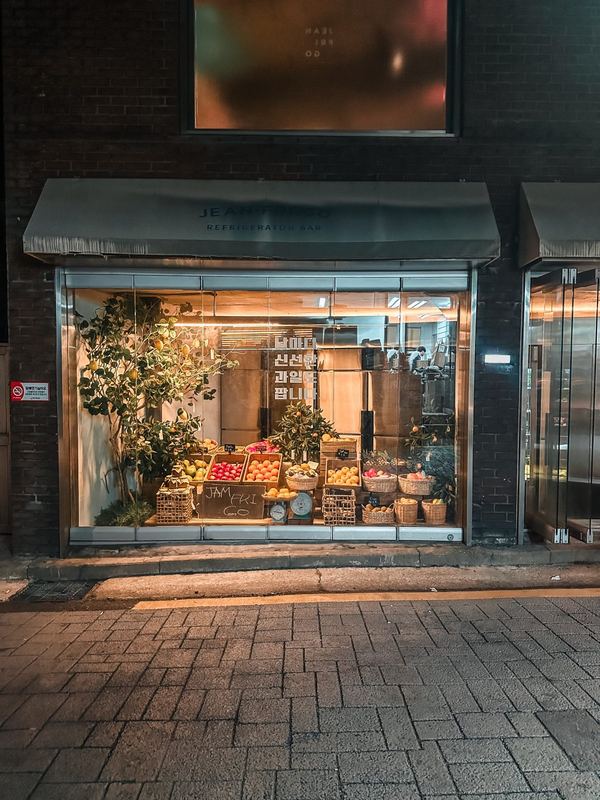
And of course, another speakeasy, this time inside a fridge. Jean Frigo looks like a fruit and vegetable shop with a row of fridges: open the last one and you're in. You order from a vintage payphone (they give you a token, you step into the booth and call your order through), and the seating is sunk into the floor, so you feel like you're walking on the tables. Small bar, huge attention to detail.

5 stops · swipe or tap a card

Morning

COEX & Starfield Library

Last day, Gangnam. Literally "south of the river": until the 1970s this side of the Han was mostly rice fields, then Seoul built it into its glossiest district of towers, plastic surgery clinics and luxury boutiques. And yes, it's that Gangnam. In 2012 PSY's "Gangnam Style" poked fun at the flashy lifestyle of the neighbourhood, and the video became the first in YouTube history to pass a billion views. The whole planet did the invisible-horse dance. The residents, I suspect, had mixed feelings.

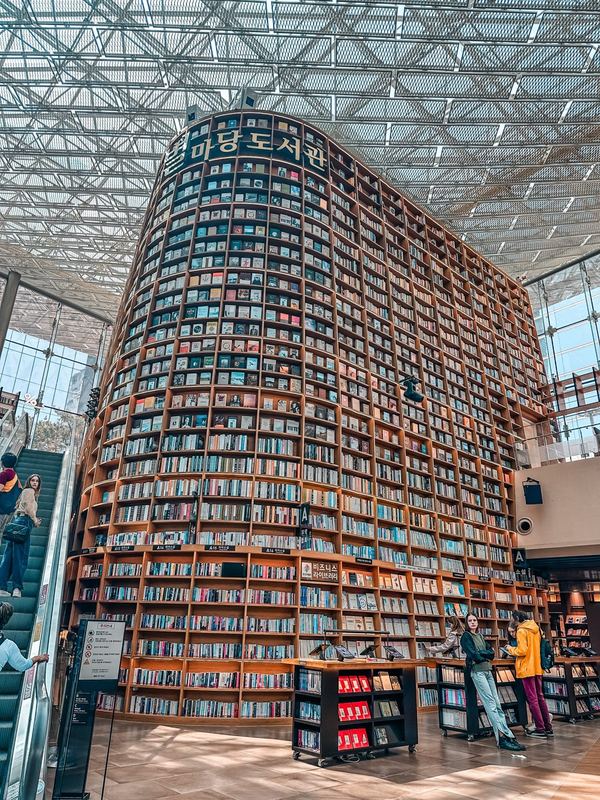
We started at COEX Mall and its famous Starfield Library, bookshelves two floors high under a glass roof, then a wander around the mall. Outside, the giant golden hands of the Gangnam Style statue, frozen mid horse dance since 2016. Press the button at the base and the song starts playing. Resistance is futile.

Morning

NUDAKE Haus Dosan

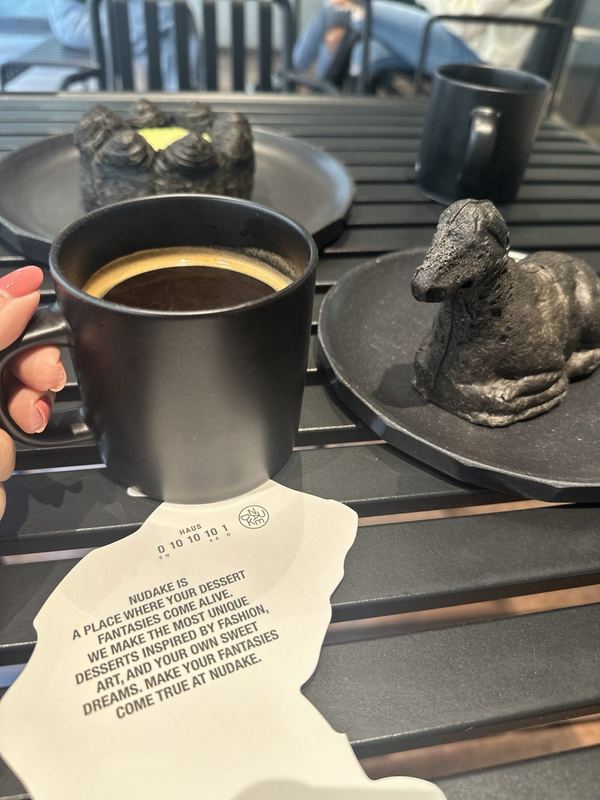
Then Haus Dosan, the flagship of Gentle Monster, the Korean eyewear brand famous for turning its shops into art installations. Downstairs is NUDAKE, its dessert café: "a place where your dessert fantasies come alive", with desserts "inspired by fashion, art and your own sweet dreams". Totally in the vibe.

The desserts are close to works of art. We had a black croissant cake with a green matcha cream inside, and the cakes are displayed like a museum exhibition, between video screens and sculptures.

Upstairs, the Gentle Monster showroom: sunglasses displayed among giant robotic installations, at the time a collaboration with Maison Margiela.

A word on Gentle Monster, because it's not your usual optician. It was founded in Seoul in 2011 by Hankook Kim, and the idea from day one was that a shop shouldn't just sell you glasses but surprise you, more gallery than store. So every flagship is built around huge installations, sculptures and moving robots, and they're refreshed regularly, which is why people come back just to see what's new. The art collaborations (Maison Margiela, Tilda Swinton, Jennie from BLACKPINK, among others) follow the same logic: the glasses are almost the excuse, the experience is the product.

Practical tip: it's a Korean brand, so if you've been eyeing a pair, Seoul is the place to buy it. Prices are usually a bit lower than abroad, and as a tourist you can claim the tax refund on top.

Afternoon

Sumsei Terrarium

Then a strange one: Sumsei Terrarium. Part art installation, part sensory walk, hard to define. You take off your shoes at the entrance and go barefoot through a series of rooms: cool sand in one, water in another, a forest of ferns, and a platform that gives you a foot massage.

After all that sensory exploration, the walk spills out into the café: a beautiful, relaxing green space full of plants and soft light, where your feet finally get a rest and your head catches up with what just happened. The ticket includes a drink. I went for a matcha, the right colour for the room. Go with an open mind, and maybe not in your most complicated shoes.

Afternoon

Ecojardin: the 18-step Korean head spa

After eight days of temples, tunnels, hanbok and speakeasies, my body was asking for one thing only: lie down and let someone else take care of me. So the last stop of the trip was a truly needed moment to relax and pamper myself, with the famous Korean head spa, the scalp treatment that has taken over everyone's feed. I went to Ecojardin Gongdeok, in Mapo-gu, one of the best known names, with a 15-step and an 18-step program. Of course I went for the long one.

It starts like a medical check-up. They put a tiny camera on your scalp and show you, on a screen and in uncomfortable detail, what's going on up there: oil, dryness, flakes, everything. Then the real ritual begins. A scalp massage with a red light device that warms and relaxes, a scrub, and a suction cup treatment on the neck and shoulders that pulls out every knot accumulated in eight days of backpacks and bus seats.

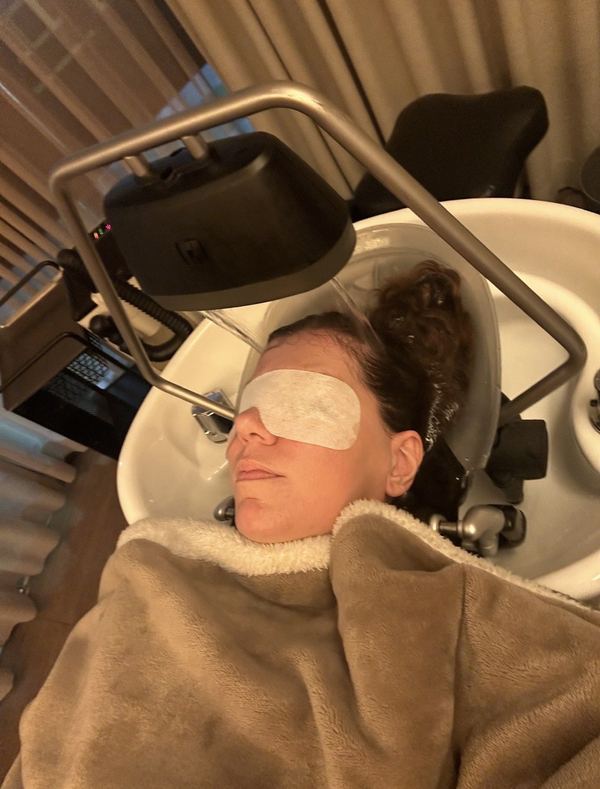
Then your head goes under a cap and into the steam, while the herbal pack does its work, and you look exactly as glamorous as you can see in the photos. The best part is the shampoo bed: you lie down under a warm blanket, eye pad on, and a gentle waterfall of warm water runs over your head. At that point I stopped counting steps. It ends with a tonic, a second camera check to see the difference, and a blow-dry, so you walk out with the lightest, shiniest hair of your life.

It takes about two hours. Prices vary by branch and change often, so check when you book. As a guide, the 15-step program starts at around 180,000 won (about 135 USD or 500 AED), and the 18-step one at Gongdeok has been reported at around 340,000 won (about 255 USD or 940 AED), a little less at some other branches. Not cheap, but worth every won. Book ahead on their website, the good slots fill up fast, and arrive with fairly clean hair and a top with an open neck. English is spoken.

Evening

Flight home

Then it was time for the airport, and for collecting our duty-free shopping. How it works: at a city duty-free store, like Lotte Duty Free in Myeongdong, you shop with your passport and your flight details, pay the tax-free price, and don't take anything home. The shop sends it to the airport, and you collect it at the duty-free pick-up counter after security.

It was my first time. I've always ignored tax-free shopping, not because I'm swimming in gold but because it looked like a big hassle for a small saving. Here the price difference was real, so we tried it, and it was actually very smart. Just get to the airport a little earlier: there can be a queue at the pick-up counter.

My take

Seoul: 10 out of 10. Artsy vibe, aesthetic cafés, plenty of interesting places and lots of small local shops with work by local designers. A city that's creatively very alive.

The rest of the country is worth seeing, but if you're short on time, focus on Seoul and Busan.

Where to eat & drink in Seoul

For the three hidden bars we tried, behind a bookshelf, a cat statue and a fridge door, read Seoul's speakeasies.

Dining in Space: a French restaurant on the top floor of the In Space building near Changdeokgung Palace, with three walls of windows over the palace and the city.

Korean BBQ: Byeokje Galbi and Wooraeok, not far from Insadong.

Cocktails: Zoo in Sindang, TocToc and Bar Musk in Gangnam.

Jokbal: Manjok Ohyang Jokbal in Dongdaemun, for braised pork trotters.

Before you go

For apps, films and K-dramas to watch before you land, read South Korea essentials.

Some links in this post are affiliate links. If you buy through them I may earn a small commission, at no extra cost to you.

More from South KoreaSouth Korea Travel Guides: Which One Is for You?