Itinerary

The Ultimate Jaipur Itinerary

  • 3 days
  • 12 stops
  • Dec 2023
Before we start · intro, costs & tips

After immersing myself in the laid-back charm of southern India and Kerala earlier this year, I was craving a bit more of a city vibe exploration. Here’s the Ultimate Jaipur Itinerary to enjoy the incredible spots the city has to offer… because what’s more perfect than the cultural richness and architectural marvels of the capital of Rajastan? 

Known as the Pink City, Jaipur boasts a unique hue that sets it apart from other cities in Rajasthan.

The origins of this distinct color scheme date back to 1876 when Maharaja Sawai Ram Singh II ordered the city to be painted pink to welcome the Prince of Wales, later King Edward VII. I couldn’t help but wonder if the Maharaja who decided to paint the town pink was secretly a marketing genius.

This gesture was not merely an aesthetic choice. It symbolized hospitality and warmth. The tradition stuck, and today, the blush-colored facades of Jaipur’s buildings continue to enchant visitors. The city’s rich heritage is evident in its palaces, forts, and temples and I’ve prepared a 2.5 days itinerary for you to discover the main spots during your next visit!

Attention Instagram addicted! Spoiler alert: Jaipur is not just a city, it’s a full-blown Instagram paradise where every corner is a colorful building, offering a texture-rich photo opportunity

Before jumping on the itinerary have a look at this Google Art&Culture for amazing aerial views of the city and a bit of history

Or take a virtual tour of Jantar Mantar to explore the largest observatory from above. 

How Much Does a 2.5 Day Jaipur Itinerary Cost?

we were a group of 3 friends travelling together, therefore if you are a couple or travel alone, you might spend more as you won’t split the cost of the transfers/drivers/taxi. Tips are not included in the costs. Iddidn’t add the lunch and dinner expenses because this is depending on your style and budget. You will find what we spent in the section below, but we choose fancy places and treated ourselves (we had a birthday celebration!) 

DAY 1COST (Indian Rupiee)DAY 2COST (Indian Rupiee)
Transfer Delhi, Jaipur2,700 INRDrive and guide all day4,100 INR
City Palace + Chandra Mahal entrance3,500 INRAmber Fort600 INR
Hawra Mahal entrance200 INRJagair Fort100 INR
Naharagarth Fort entrance200 INRGalta Ji Temple250 INR
Taxis x 2 (to Fort and for dinner)300 INR
Hotel in Jaipur (Bloom Boutique Hotel)7,450 INR
TOTAL 19,400 INR (230 USD)

Here's the Perfect 2.5 Day Itinerary for Your Jaipur Discovery

5 stops · swipe or tap a card

2-3 h

The City Palace

A royal splendour

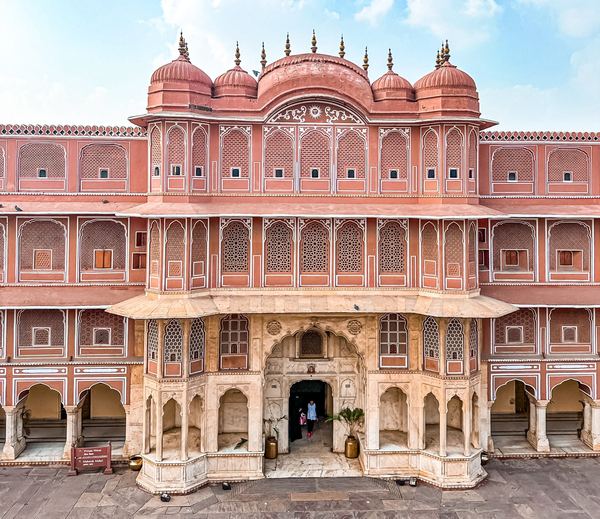
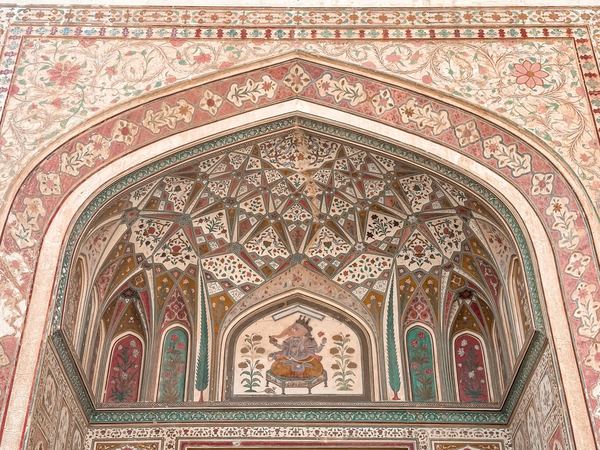
Built in the 18th century, the City Palace is a testament to the grandeur of the Maharajas of Jaipur. With a seamless blend of Mughal and Rajput architectural styles, each courtyard and chamber echoes tales of battles, royal celebrations, and the opulent lifestyle of a past era.

Crafted from red and pink sandstone, gleaming white marble, adorned with antique artworks, intricate detailing, and vibrant kaleidoscopic patterns, the City Palace is a visual feast.

The architectural marvel comprises a delightful seven-story citadel, an antique museum, expansive courtyards, sumptuous rooms, meticulously landscaped gardens, and captivating archways, each element meticulously curated to perfection.

Technically, the Palace complex includes the Jantar Mantar and the Hawk Mahal. However, for the tourists, given the separate entrances, they are considered three separate Jaipur tourist attractions. 

Here's an overview of the main spots:

Mubarak Mahal

As you step into the initial courtyard, a welcoming sign awaits "Mubarak Mahal", meaning "welcome place". This stand-alone haveli, once the reception hall and the latest addition to the City Palace, greets you with its creamy facade.

Pritam Niwas Chowk

Pritam Niwas Chowk is a courtyard straight out of an Instagrammer's dream. Four vibrant brass gates, representing seasons and Hindu gods, steal the show. Despite the bustling crowd, this Jaipur City Palace gem was originally a stage for royal dance performances.

Chandra Mahal (palace of the Moon)

NOTE: To explore the upper floors of the palace, including the renowned blue room, you'll need to grab the Royal Splendour ticket, priced at INR 3,500 per person ($43 USD). This ticket not only grants access to the upper levels of Chandra Mahal but also comes with a personal guide and a complimentary chai for an enriched experience.

The Chandra Mahal building with 7 levels, is the present royal family's residence. 

On the first floor, immerse yourself in the royal narrative at the museum, a treasure of antique weaponry, carpets, manuscripts, and vibrant Indian artwork.

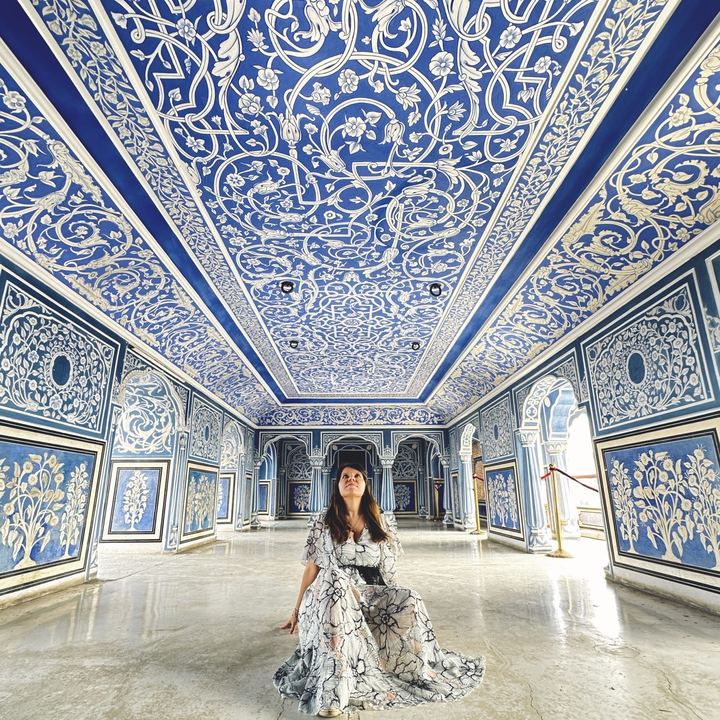
The second floor unveils the Sukh Niwas, or the 'blue room,' a dining space fit for kings and queens, where vibrant blue meets intricate white detailing. 

Climbing higher, the third and fourth floors showcase the Rang Mandir, 'The Mirror Room,' and Shobha Niwas, the 'Hall of Beauty,' boasting mirror magic, embellished tiles, and gold leaf detailing. Fancy, right?

The fifth floor, Chavi Niwas, echoes with the Maharaja's history, while the sixth floor, Shri Niwas, adds another layer of royal charm.

Top it off on the seventh floor at Mukut Niwas, the crown of the palace. Here, flags announce the Maharaja's presence, and you can catch a glimpse over the city.
30min

Hawa Mahal

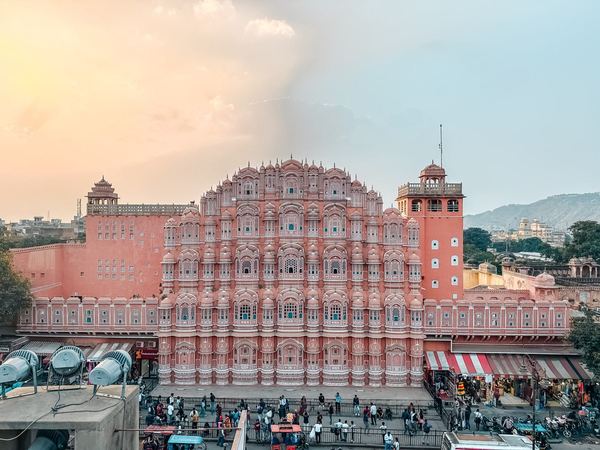
The iconic Palace of the Winds

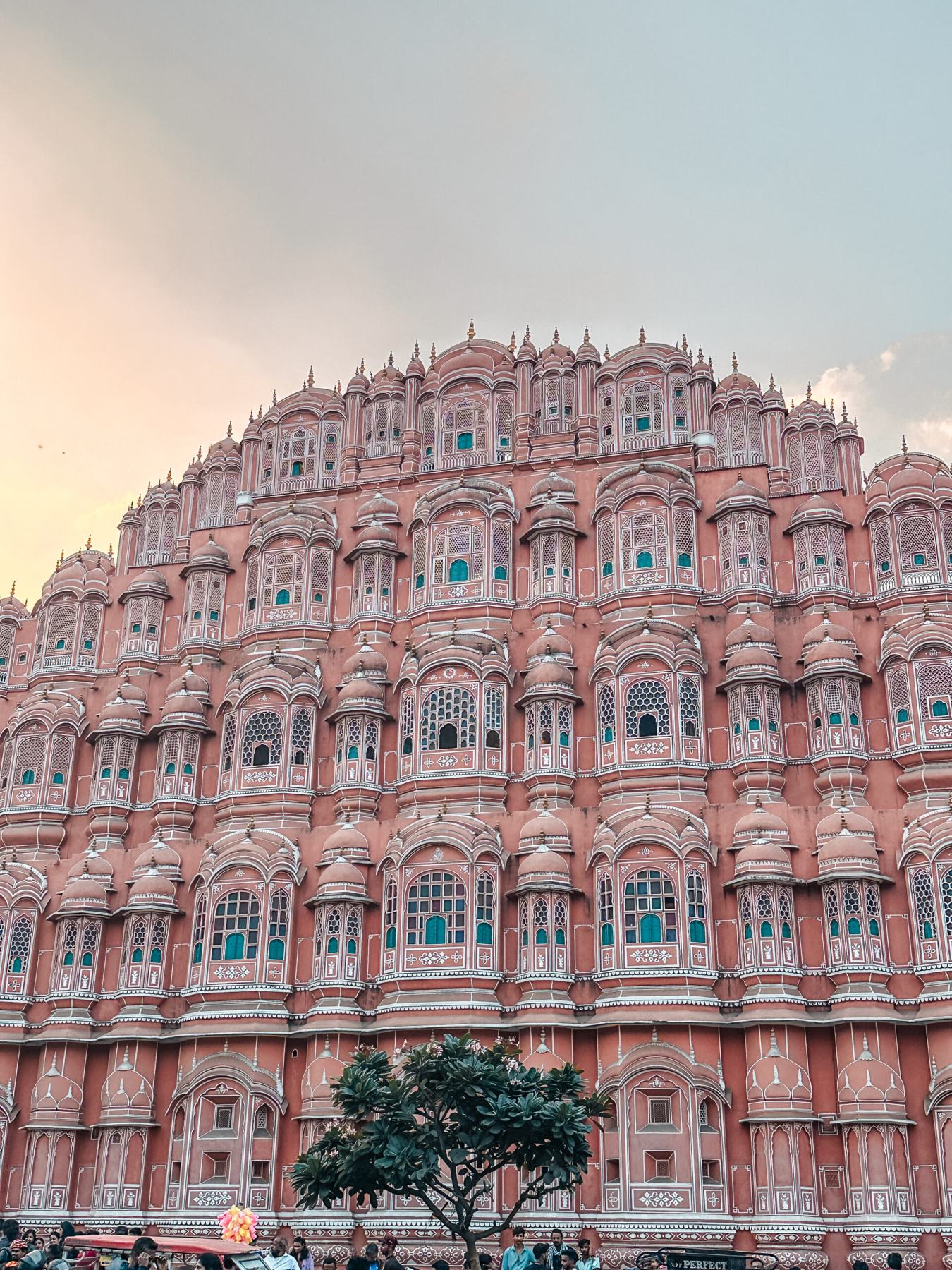
Hawa Mahal, translating to the "Palace of Winds," earned its name from a captivating feature that goes beyond its regal facade. Constructed in 1799 by Maharaja Sawai Pratap Singh, this architectural gem was designed with 953 intricately carved windows, allowing the cool breeze to flow through the structure.

The purpose was both practical and aesthetic, as these windows were crafted to enable the royal ladies to observe street festivities and daily life without being seen!

It is very unusual for a building to be not known for its front, but its back.... oh yes what you see from the street is essentially the rear of the building.

To witness its golden glow, sunrise is the ideal time, although the palace itself opens from 9 a.m. to 6 p.m. The interior is very simple, there are no stairs inside the Hawa Mahal. This is quite fascinating because the palace is 15 mt high.

PHOTO TIP: If you want to see the Palace of the Winds from a higher perspective, I recommend having a chai at Tatoo Café and Lounge. It has two terraces where you can take beautiful photos! 

30 min

Jantar Mantar

The world's largest stone Sundial

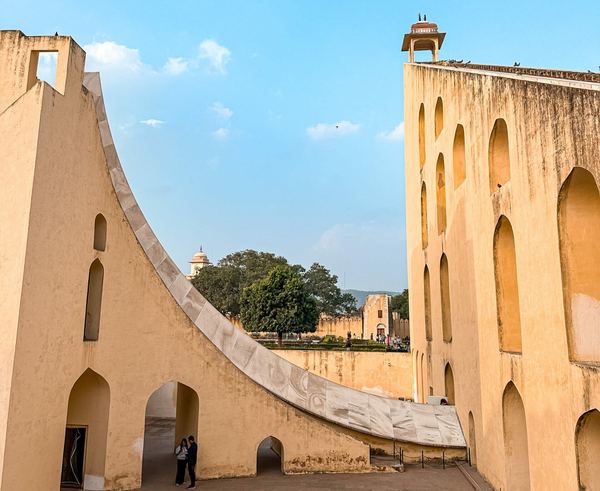
Jantal Mantar will be at your right, as soon as you exit the City Palace. It's not just an observatory, it's among the biggest globally, earning a spot on UNESCO's list. As you wander through, it feels like strolling in a metaphysical painting by De Chirico.You'll discover 19 ancient instruments that once helped people decode the secrets of the stars.

The monument was completed in 1734 and helped royal astonomers to predict zodiac months, indicate sun signs, observe the night sky for lunar calendars and horoscopes, and function as a clock for telling time based on the solar calendar.

1h

Nahargarh Fort

Nahargarh Fort in Jaipur is famous for its many stories, especially the spooky ones about ghosts. It was built in 1734 by King Sawai Jai Singh II to keep his capital safe from attacks. Legend has it that a ghost, Nahar Singh Bhomia, was causing trouble during its construction, so they named the fort after him to calm things down

TOP VIEW POINTS You can get awesome views from the Madhvendra Bhawan terrace, or Padao Restaurant, or catch a beautiful sunset at Sunset Point

Dinner

Dinner at Mohan Mahal Leela Palace

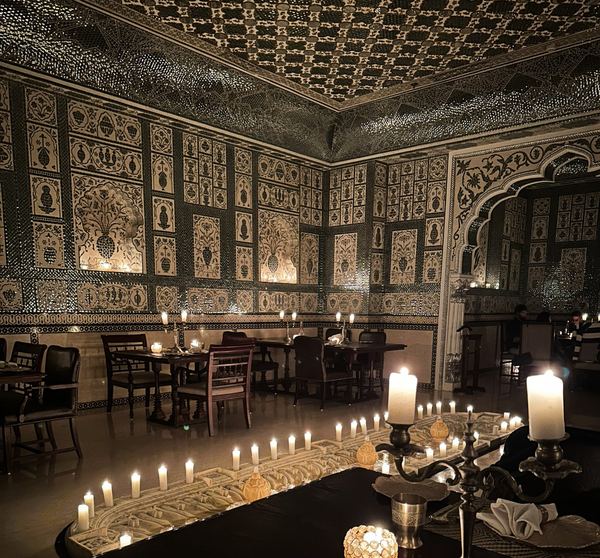
Mohan Mahal, a restaurant in the Leela Palace, draws inspiration from Sheesh Mahal at Amer Fort. Crafted over three years by the same artisans, it features 350 thousand pieces of cut glass, creating a captivating ambiance...dining by candle light only! I'm not a big fan of Indian cuisine because I don't enjoy spices, but the setting was fantastic. Unfortunately, I didn't enjoy the 4 course menu as much as the location! The menu is 50$ for non-vegeterian option VAT included.

6 stops · swipe or tap a card

2-3 h

Amber Palace

Amber Palace, Amber Fort, Amer Palace, and Amer Fort are all different names referring to the same place, it took me quite a lot of google search to understand that!  

Amber Palace is an architectural marvel of sandstone and marble, unfolds its treasures across four courtyards:

Jaleb Chowk (primary Courtyard)

Stepping into Jaleb Chowk, I could almost hear the echoes of soldiers assembling, preparing for royal processions. The Sun Gate (Suraj Pol) and Moon Gate (Chand Pol) seemed to whisper stories of grand entrances and regal events.

Second Courtyard

Ascending the staircase, the second courtyard revealed the Diwan-e-Aam, where the hall's pillars seemed to echo the voices of historic public interactions.

Third Courtyard

Passing through Ganesh Pol, the third courtyard felt like entering the king's private sanctuary. The Sheesh Mahal, adorned with glass from Belgium, created a mesmerizing play of light, transporting me to an era of opulence.

Fourth Courtyard

The rear courtyard held the zenana, where the aged walls whispered tales of queens' gatherings. Completed in 1599, it stood as a living testament to the architectural brilliance of that time.

King's Room

Though off-limits to regular visitors, the king's bedroom near Sheesh Mahal teased my curiosity. Imagining the room illuminated by candlelight, its ceiling adorned with tiny mirrors, painted a celestial picture.

The entry point to the fort is situated a bit higher, and a slender pathway leads you to the main gate. Opting for a leisurely walk is the most recommended route, allowing you to enjoy the surrounding

NOTE: People choose to get to the fort on elephants. Please avoid this option! This is one of the most unethical things you could ever do 

15 min

Panna Meena ka Kund

Stairwell (not) to heaven

Panna Meena ka Kund is a cool spot in Jaipur and it's just a quick 10-minute drive from Amer Fort, but most tourists miss it.

If you love taking pictures, you should definitely check out this place in Jaipur.

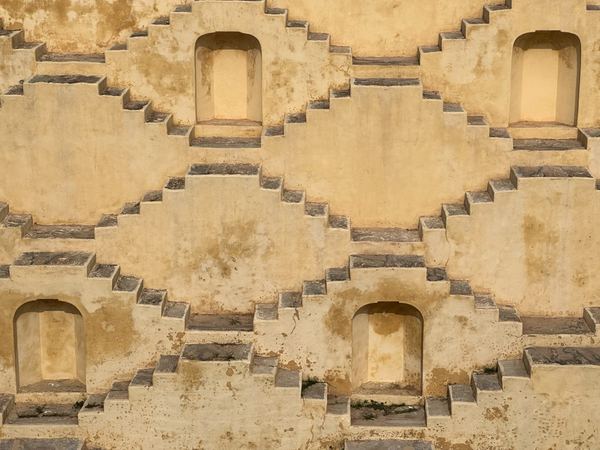
Constructed with a distinctive zigzag pattern of stairs leading down to a water basin, the stepwell served as a communal gathering place for locals to fetch water. The intricate design not only added beauty to the structure but also facilitated ease of access to the water at different levels.

Historically, stepwells were crucial in arid regions like Rajasthan for water conservation and storage. They were not only utilitarian but also played a social role, providing a cool retreat during hot seasons and serving as a space for community interaction.

Local guards are there to make sure everyone follows the rules. Just a heads up, though, you can't go down the stairs anymore. They changed this rule recently to keep the place safe

10 min

Jal Mahal

The Water Palace

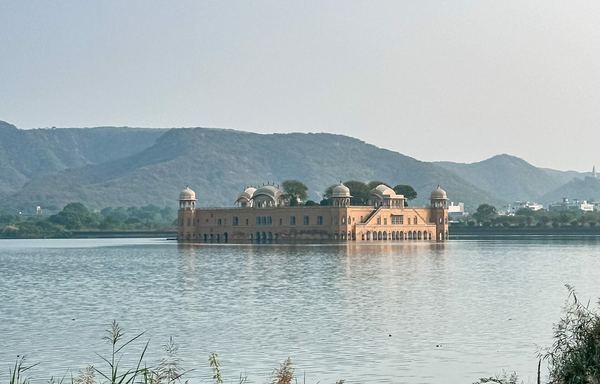
Jal Mahal, the Water Palace, is a mesmerizing architectural gem in the middle of Man Sagar Lake in Jaipur. This five-story structure showcases a perfect blend of Rajput and Mughal styles and was built as a pleasure palace for the royal family.

Now four out of the five stories of Jal Mahal remain submerged underwater, therefore the entry inside the Water Palace is restricted. Jal Mahal can be appreciated from the banks of the lake: there are walkways and viewpoints that provide stunning views of the palace against the backdrop of the lake.

1h

Jaigarh Fort

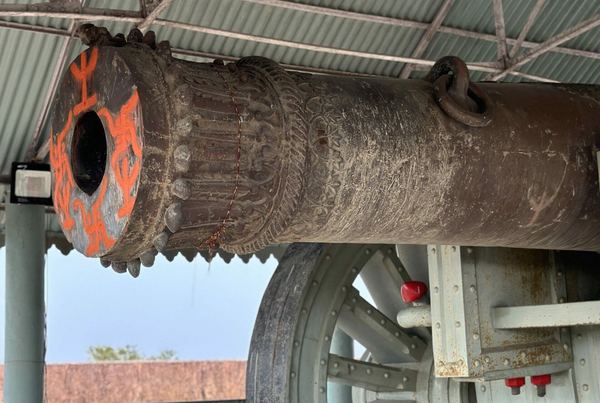
The fort offers panoramic views of the surrounding landscape and the Amer Fort below. With its strategic location Jaigarh Fort played a crucial role in defending the region during historical conflicts. We strolled around but there's not much to see, just enjoy the views and see the world's largest cannon on wheels. 

Galta Ji Temple

Galta Ji aka Monkey Temple

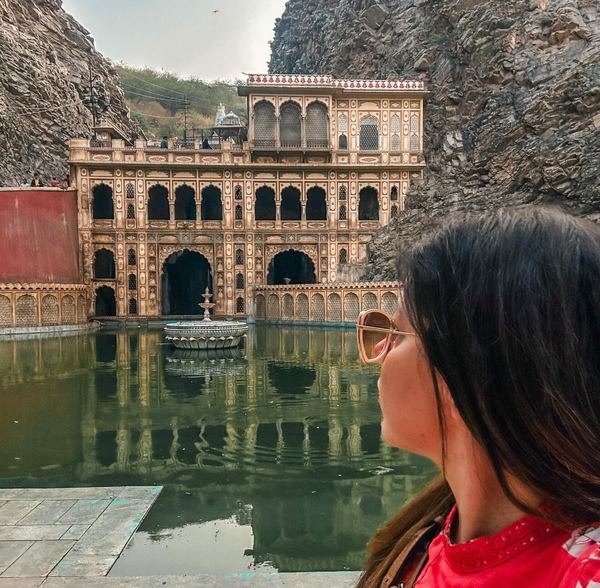
On the way back to Jaipur city centre, we stopped at Galta Ji Temple, nestled on the picturesque Aravalli Hills.

The temple complex is surrounded by striking natural landscapes, creating a serene and tranquil atmosphere. As the nickname suggests, the temple is home to a large population of monkeys. These animal are considered sacred, and visitors can observe them playfully interacting in and around the temple.

Unfortunately, the temple itself wasn't well-maintained, with litter and garbage scattered around, and the smell of numerous cows and monkeys. Nevertheless, the atmosphere is uniquely captivating, and I personally enjoyed the abandoned vibe and the scenic setting of the temple on the rock. Despite not being as well-known among tourists, this is an hidden gem and I highly recommend a visit.

The complex is renowned for its seven sacred "kunds" or water tanks, fed by natural springs. Pilgrims believe that bathing in these kunds during the annual festival of Makar Sankranti absolves them of their sins. 

Begin your temple complex exploration by visiting the various shrines, including the Galta Ji Temple, Sun Temple, and Monkey Temple. Take a leisurely break to embrace the tranquil atmosphere. Find a shaded spot to relax and appreciate the scenic views of the surrounding hills.

The higher you climb, the more peaceful the atmosphere  becomes. 

Caution with Monkeys: While the monkeys are a charming aspect of the temple, it's essential to be cautious and not feed them. Respectful Attire: As with many Hindu temples, it's advisable to dress modestly and cover your shoulders and knees.

Dinner at Caffe Palladio

A blend of

When I spotted Caffé Palladio Jaipur on Conde Nast Traveller, I was like, "Whoa, we gotta check this out!" 

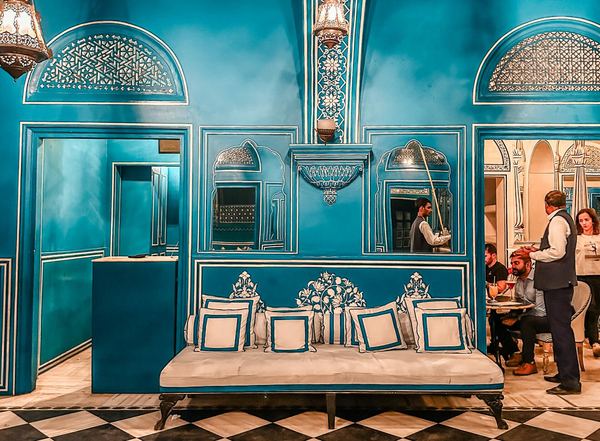
Elegantly arranged outdoors, adorned with glowing candles, and boasting an exquisite interior featuring a blue color theme, with its tented ceilings and custom-printed floral banquettes, it transports you to the splendor of the Mogul era.

1 stop · swipe or tap a card

15 min

Patrika Gate

A must visit for the best photo op

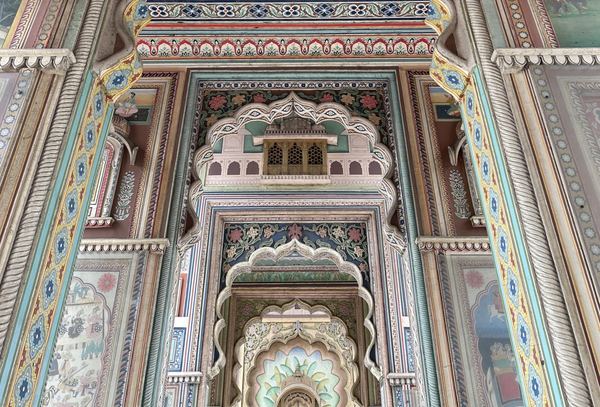
The last spot of this Jaipur Itinerary! While inspired by the seven original heritage gates of Jaipur, Patrika Gate is a relatively new attraction, becoming the city's ninth gate in 2016. Named after the local news company Patrika, it features an elaborate pink gate on the outside and a vibrant rainbow walkway inside. The hand-painted walls and ceilings showcase scenes from various regions, offering a glimpse of Rajasthan's rich architectural and cultural legacy. PS: entrance is completely free!

TIP: For the best photos, visiting in the early morning (around 7 am) is recommended to capture the beauty without waiting. This spot is on the way to the airport so you can easily fit in the 2 day schedule at any time!

How is the shopping in Jaipur? 

Explore the bohemian wonders and aesthetic delights of Bapu Bazaar, a one-stop shopping haven for all things Jaipuri. From vibrant clothing to traditional Rajasthani juttis and budget-friendly home decor, this bustling marketplace offers an array of treasures. Jaipur is renowned for its textile craftsmanship, including block printing, bagru prints, and detailed embroidery.

Here’s the list of the top 10 Bazaar for your Jaipuri shopping cravings:

  • Johari Bazaar, For Jewelry
  • Tripolia Bazaar, For Bangles
  • Chandpole Bazaar, For Handicrafts
  • Kishanpole Bazaar, For Textiles
  • Nehru Bazaar, For Traditional Jootis
  • Sireh Deori Bazaar, For Street Shopping
  • Bapu Bazaar, For All Jaipuri Items
  • Mirza Ismail Road (MI Road), For Pottery
  • Tibbati Market, For Local Souvenirs
  • Anokhi, For Colorful Garments

From regal heritage to bustling street scenes, Jaipur ensures an immersive voyage into the vibrant heart of Rajasthan's cultural mosaic

The Pins in the Google map below are color coded: in blue the spots we visited on DAY 1 and in green the ones we did on DAY2. Now your Ultimate Jaipur Travel Itinerary is completed 😉

The whole trip on the map

Open in Google Maps

Some links in this post are affiliate links. If you buy through them I may earn a small commission, at no extra cost to you.

More from IndiaIndia's Golden Triangle essentials